
AI & Agents · AI ERP & SaaS · Full-Stack & UI/UX
HubAIOps: HubSpot AI-Readiness Audit App with Claude-Written Plans
By David Gadyan · Published
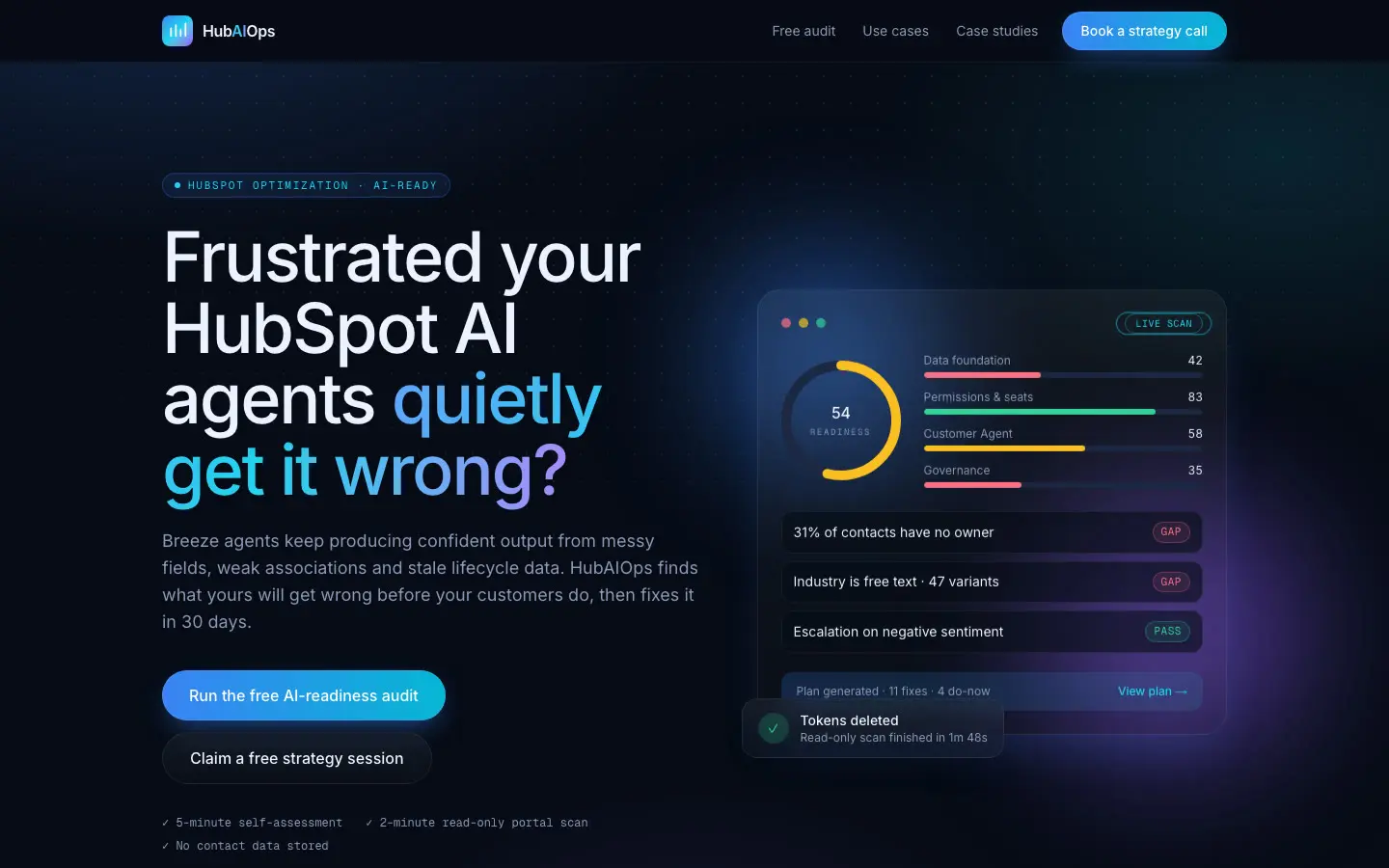
A HubSpot optimization site and audit app. It scores a HubSpot portal across 7 AI use cases with 31 checks, 15 of them measured live through a read-only HubSpot OAuth scan, and Claude turns the findings into a Do Now / Do Next / Do Later plan on a shareable results page. Includes a filterable case-study library with before and after readiness scores, lead capture, an admin view and a static GitHub Pages build.
The problem
HubSpot's Breeze AI agents don't fail loudly. They keep producing confident output from messy fields, duplicate records, stale lifecycle data and permission gaps. A HubSpot consultancy wanted a credible, AI-ready front door instead of a brochure, and an audit that measures a portal rather than asking about it, so the first strategy call starts from a diagnosis.
The product in use
What I built
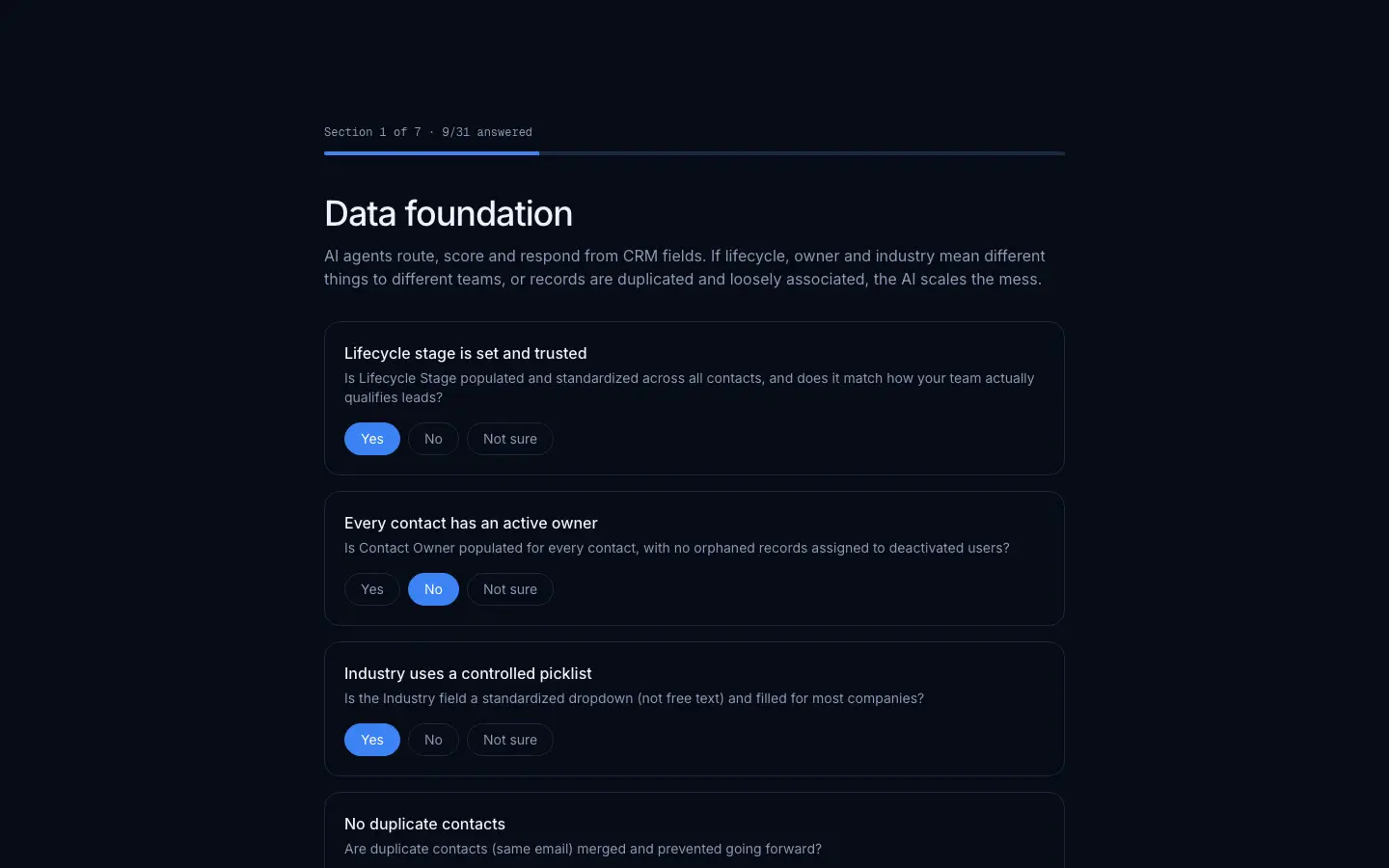
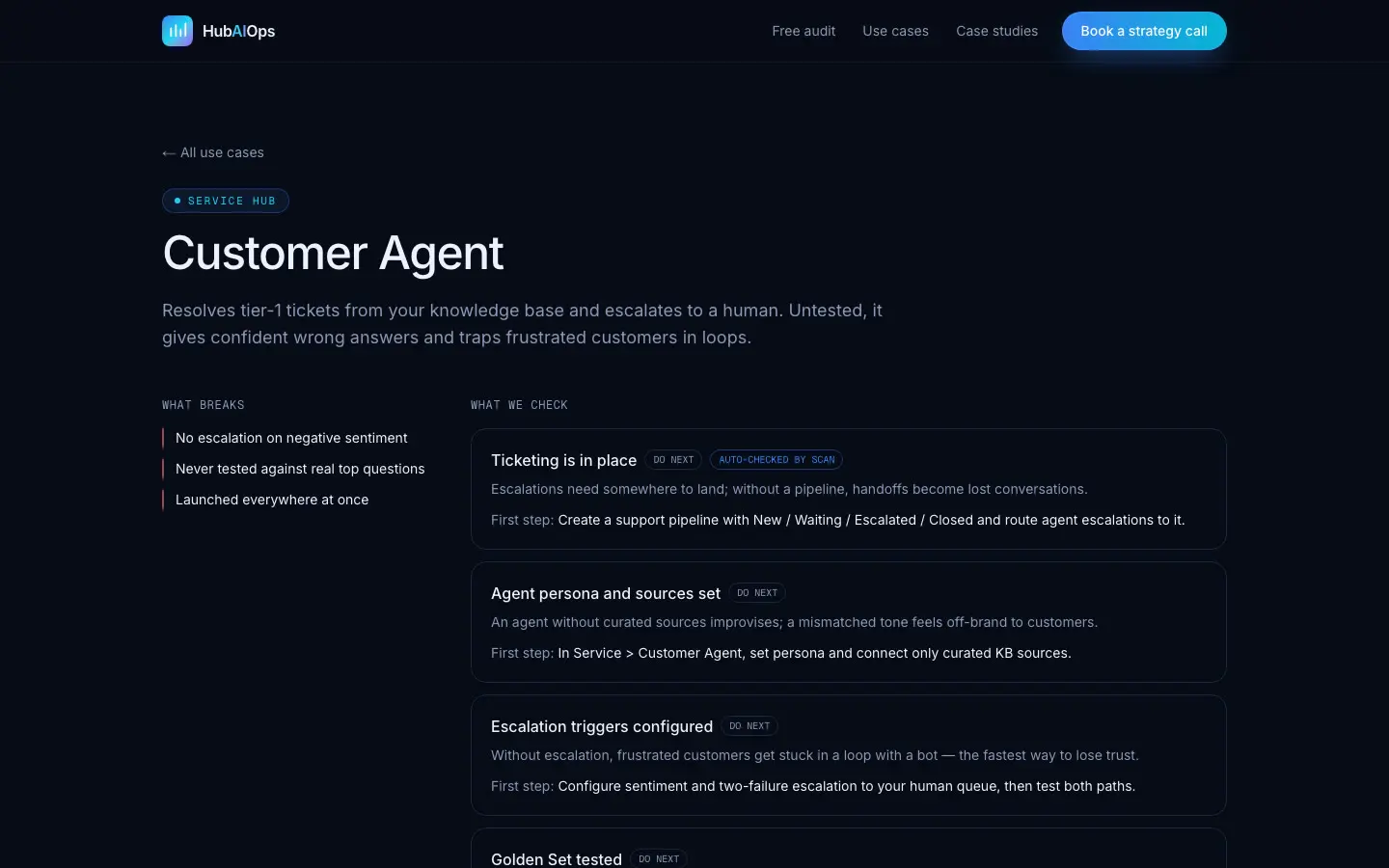
Audit in two modes. A 31-question self-assessment, or a read-only HubSpot connection that measures 15 checks directly: blank or deactivated owners, missing lifecycle stages, duplicate contacts and companies, association gaps between contacts, companies and deals, near-duplicate custom properties, free-text Industry fields, ICP field coverage, the cold-lead pool, ticket pipelines, blog sources, and workflow health and documentation. The scan runs one HubSpot object per request, so it stays inside serverless time limits.
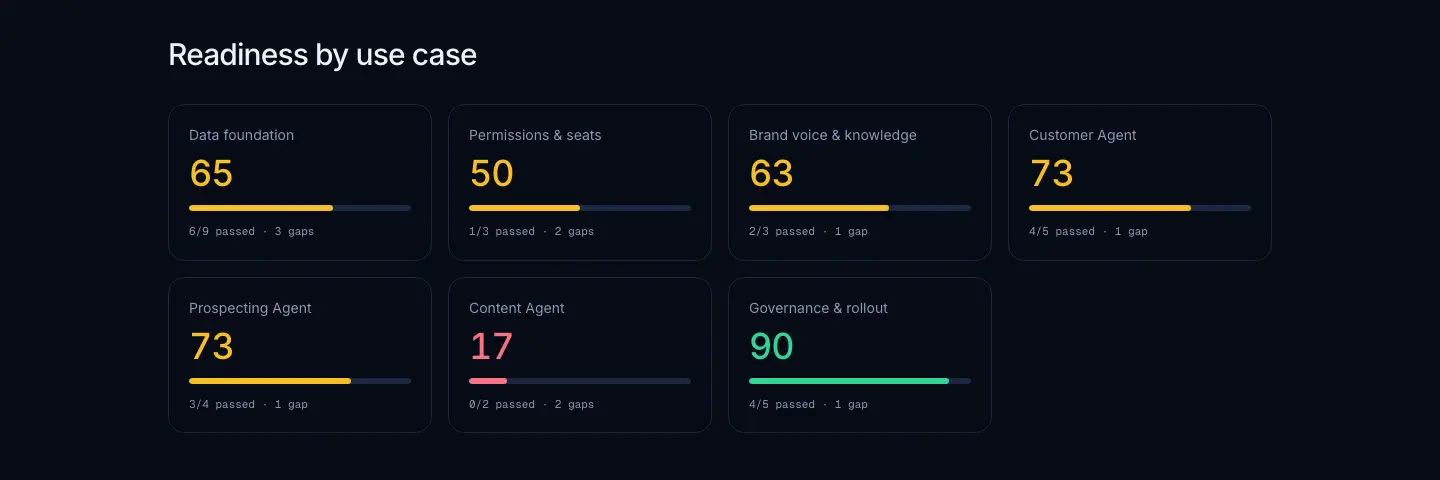
Severity-weighted scoring. Each use case gets a 0 to 100 score: data foundation, permissions and seats, brand voice and knowledge, the Customer, Prospecting and Content agents, and governance. The readiness bands follow HubSpot's implementation playbook.
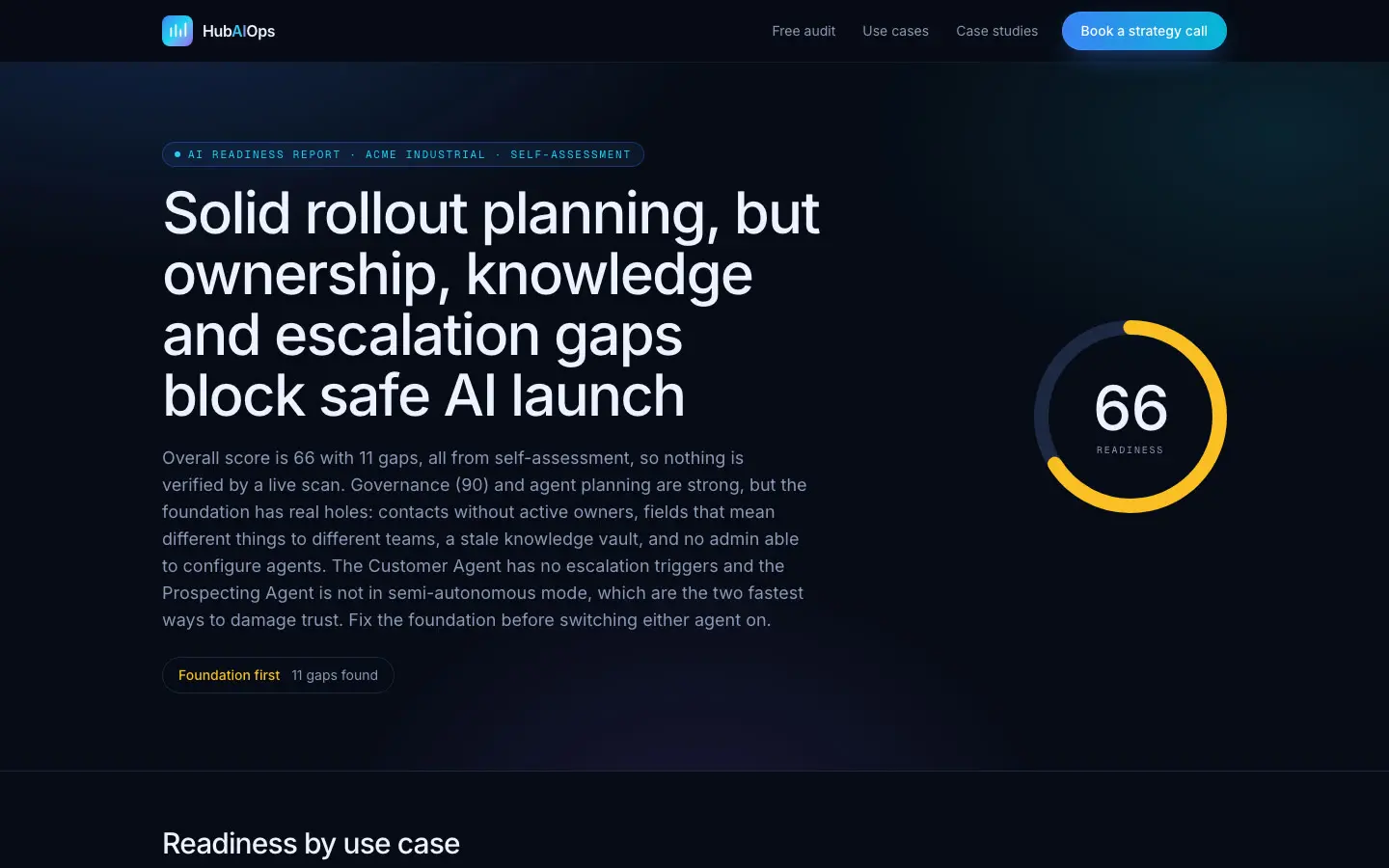
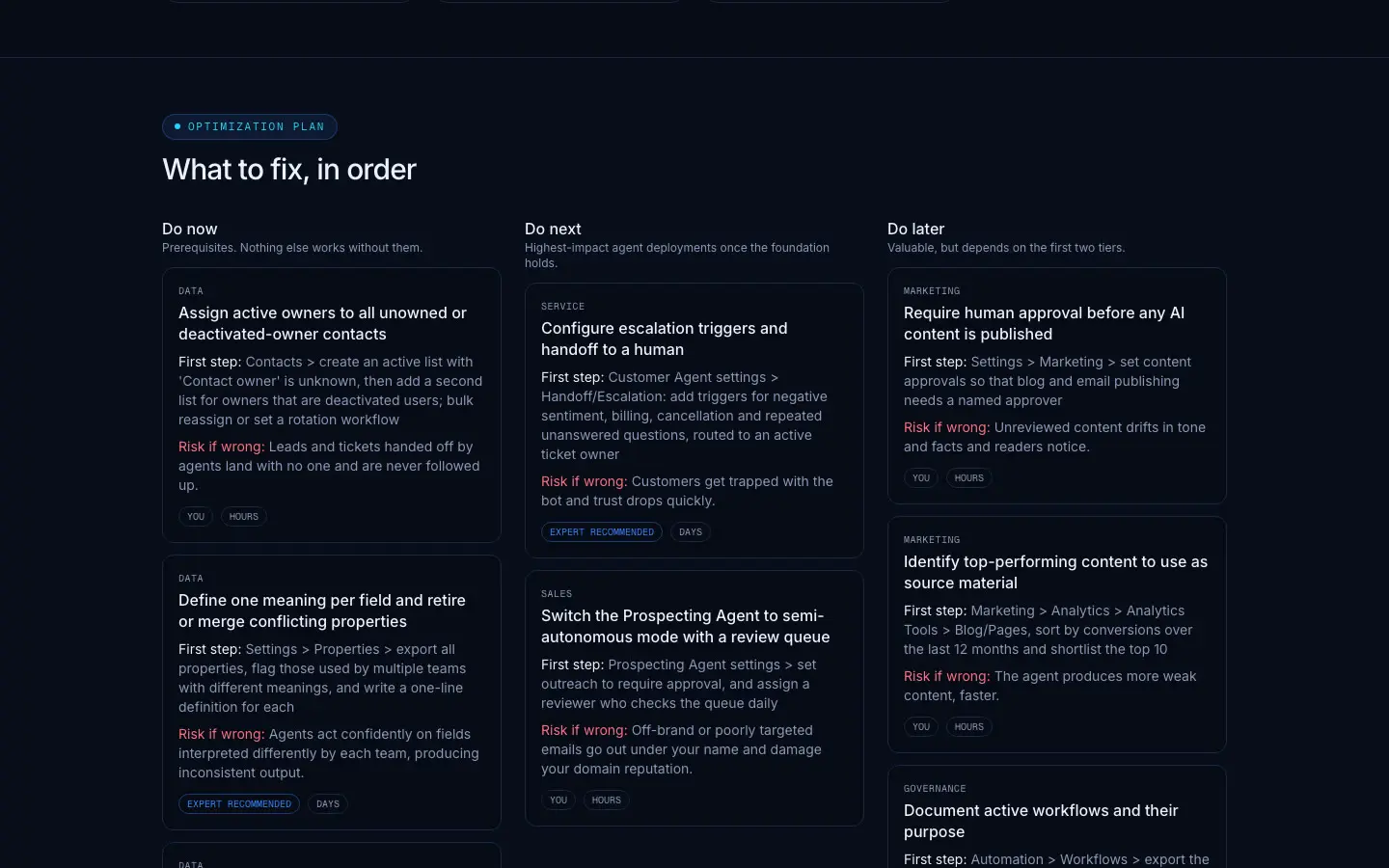
A plan written by Claude. The Anthropic API returns structured JSON: a verdict and top risks per use case, prioritized fixes with the first step inside HubSpot, the risk if it is done wrong, and whether the client or an expert should own it. It adds Golden Set test questions for the Customer Agent and ICP suggestions. The output is validated against a schema, and a deterministic rubric plan takes over if the model is unavailable. Each audit gets a private, shareable results page with its own Open Graph image.
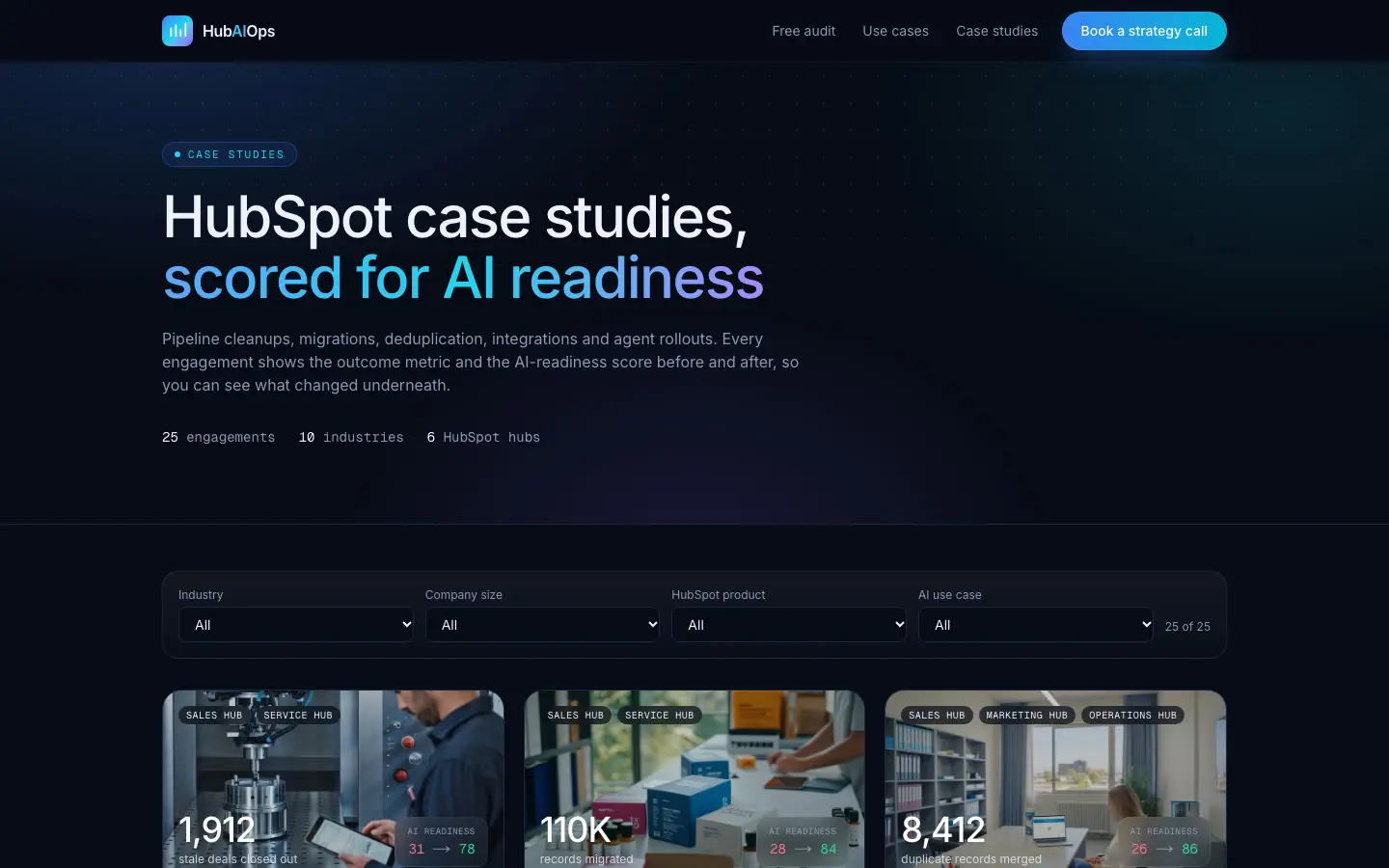
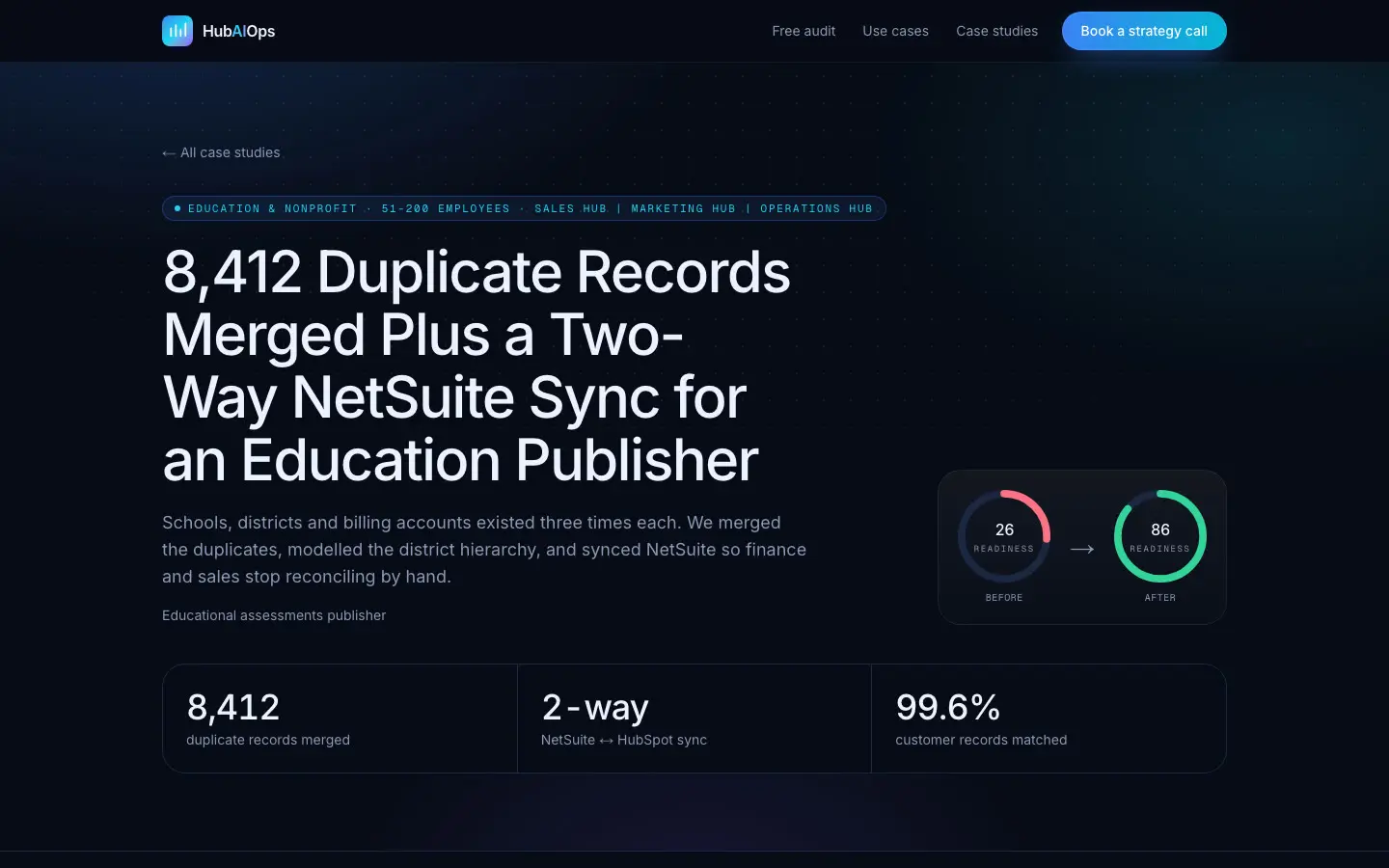
Case-study library. 25 studies filterable four ways, each with the outcome metric and the AI-readiness score before and after. One is a real named project, Virgil HealthCare AI; the other 24 are representative write-ups of the standard HubSpot optimization playbook.
Privacy by design. Read-only scopes, AES-256-GCM encrypted tokens deleted the moment the scan finishes, only counts and percentages stored, and no contact records ever sent to the model.
Lessons encoded in the checks
- AI amplifies the data it is given. Fix the foundation first, then switch on one agent at a time.
- Fields must mean one thing. Write one definition per field and archive near-duplicate properties.
- Associations tell the account story. Merge companies by domain and require contacts on deals.
- Permissions change the answer. Align visibility before comparing AI outputs between teams.
- Guardrails are the product. Semi-autonomous mode, send caps, escalation rules, a Golden Set of 20 real questions and a silent launch.
- Measure outcomes, not usage. Name an AI owner and hold a weekly review.
- Workflows are upstream of AI. Audit, fix and document automation before adding more.
- Migrations are the best time to fix meaning. Reconcile and deduplicate on the way in.
Related projects
Receptra: AI Voice Receptionist SaaS for Small Businesses
AI & Agents · AI ERP & SaaS · Full-Stack & UI/UX
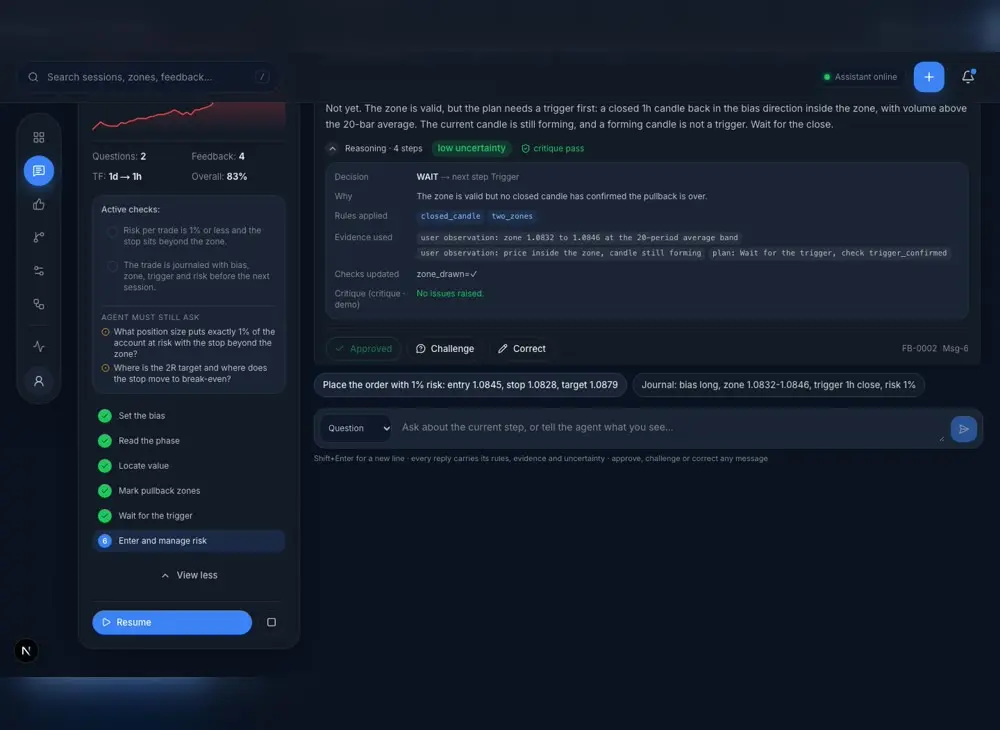
AI Trading Assistant: a Copilot That Holds You to Your Own Strategy
AI & Agents · Finance & Quant · Full-Stack & UI/UX
ImprovTalk: React Native AI Coach for Charisma and Rapport
Full-Stack & UI/UX · AI & Agents · AI Marketing & Analytics