
AI & Agents · Finance & Quant · Full-Stack & UI/UX
AI Trading Assistant: a Copilot That Holds You to Your Own Strategy
By David Gadyan · Published · Updated · Client: Nemanja Jovic
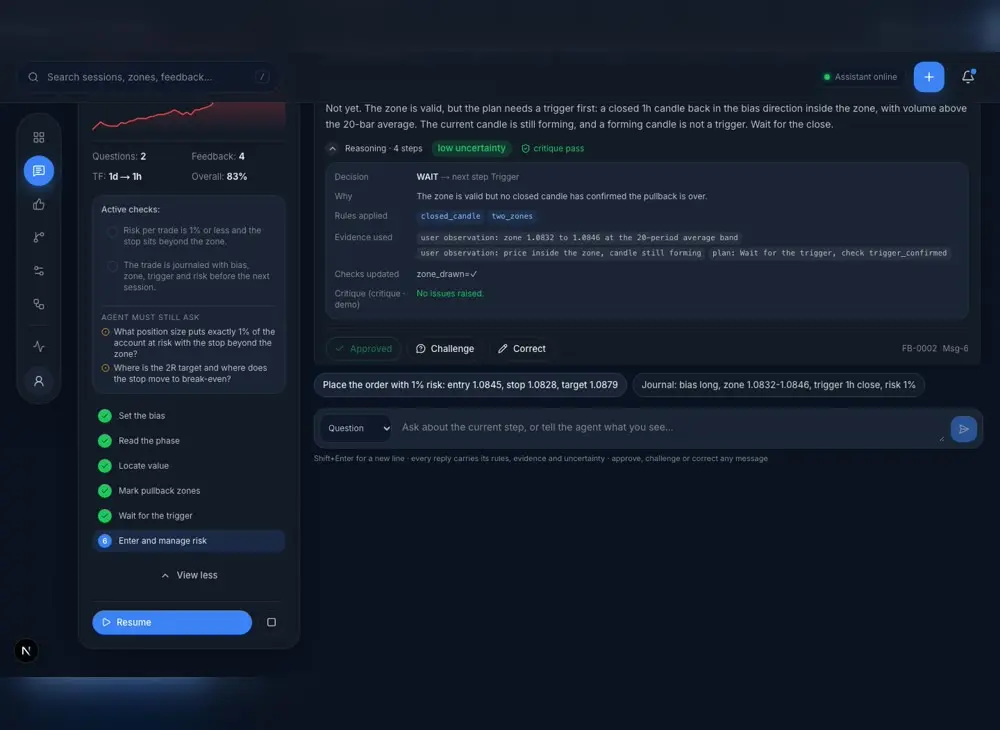
An AI trading copilot for a discretionary trader, built under NDA. The trader's own method is loaded as configurable steps, rules and reference documents, and the assistant reasons strictly inside them: every answer names the decision, the rules applied, the evidence and the uncertainty. The trader approves, challenges or corrects each reply, and reviewed feedback becomes the next version of the assistant only after an independent judge model passes it.
The problem
Most discretionary traders do not lose because their plan is bad. They lose because, under pressure, they stop following it: an entry taken before the confirmation, a stop moved, a session that drifts away from the rules written down calmly the night before. The client trades a documented method of his own and wanted what a good independent consultant provides: someone who knows the plan cold, looks at the same chart, and says "this is not what your plan says", every time, without getting tired or emotional.
He also wanted the opposite of a generic trading chatbot. In his words, the assistant had to understand a proprietary trading methodology, interpret complex market structures, integrate with external charting tools, keep contextual awareness across trading sessions and support nuanced, discretionary decision-making. All of that is covered by an NDA, so this page describes the engineering, not the method.
What I built
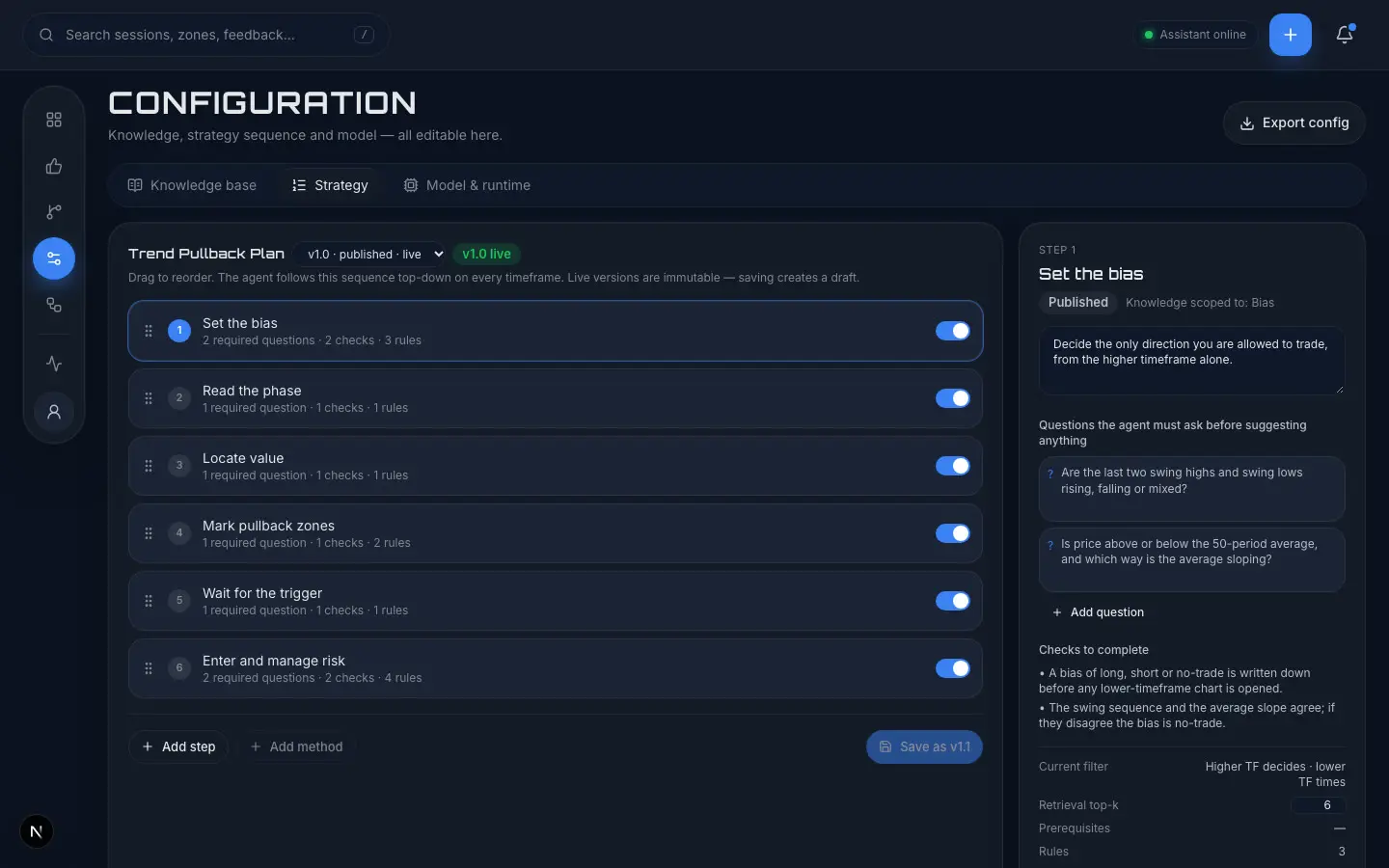
- Strategy-first configuration. The method is not hard-coded. It is loaded as a versioned package: ordered steps, named rules with their checks, and the trader's own reference documents, chunked and embedded so the assistant can retrieve them. Steps can be reordered and rules edited in the app, and each change is published as a new version, so the strategy evolves without a developer.
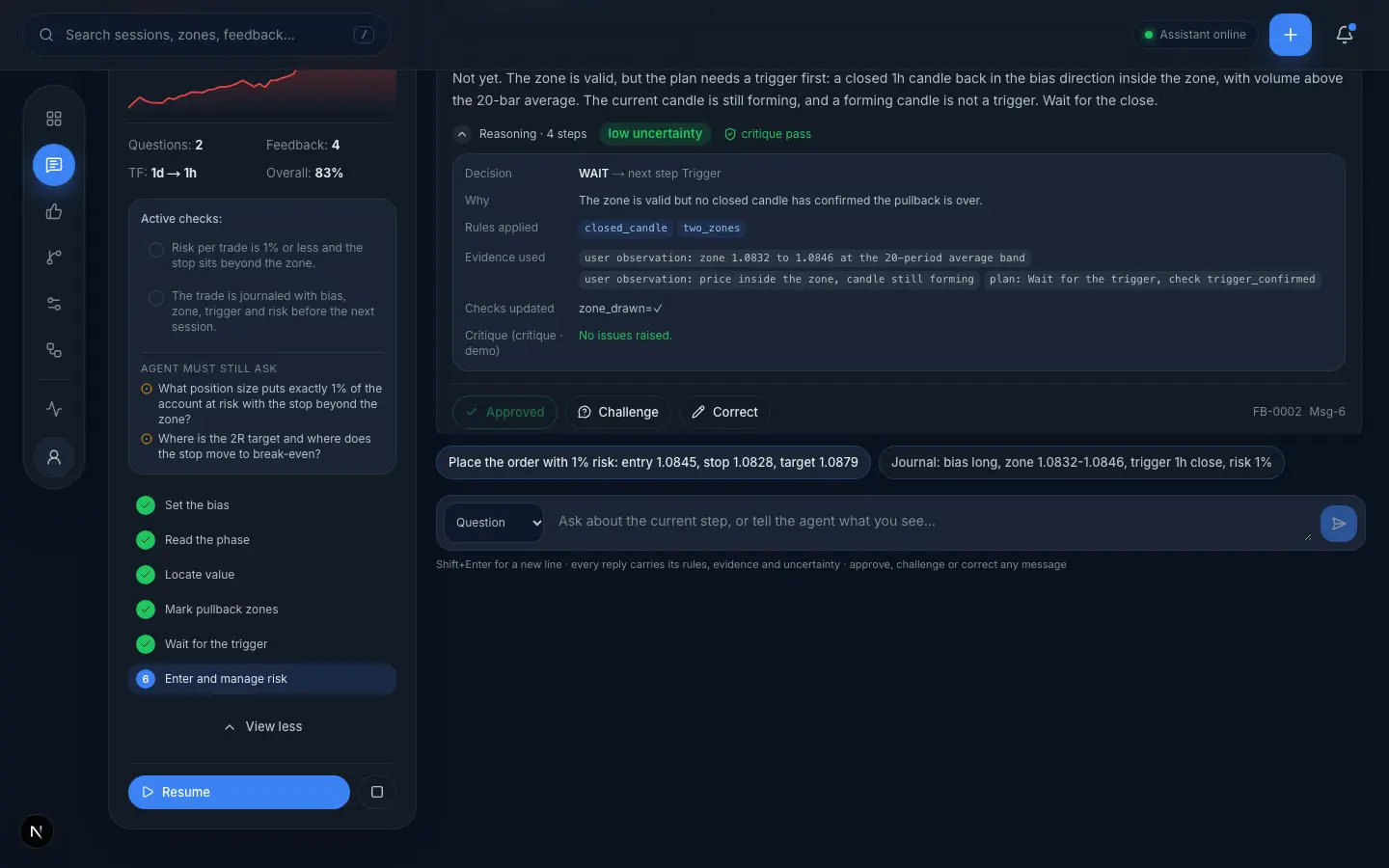
- Answers that cannot drift. Every reply is structured: the decision, the reasons, the rules applied, the evidence used, the uncertainty and the next step. The assistant works inside the current step only and cites only the evidence it was shown; the code strips any claim that is not backed by evidence before the trader sees it, and a second model critiques each answer first.
- A review loop with a gate. The trader can approve, challenge or correct any reply, and a correction changes the session state immediately. Approved feedback is frozen into a dataset and turned into a candidate learning state: worked examples and guidance, not fine-tuning. An independent judge model scores the candidate on a frozen holdout set across ten dimensions, four of them hard gates. It is promoted only if it passes without regressing against the live version, and it can be rolled back.
- Sessions with memory. Live and backtest sessions keep their state, messages, observations and market snapshots; each turn sees the recent conversation, the session state and the documents most relevant to the current step. Live sessions read the chart from the trader's charting tool; backtests run on CSV files, a market-data library or synthetic series.
- Built to run anywhere. FastAPI and Postgres with pgvector behind a Next.js front end with streaming replies and lightweight charts. Any OpenAI-compatible endpoint can serve the primary, critique and judge roles, so models can be swapped or self-hosted, with no-training and zero-retention settings where the provider offers them. A mock model and synthetic market data let the whole system run offline, and 52 backend and 29 frontend tests cover the step state machine, the API flow, the evaluation scorer and the data layer.
The product in use
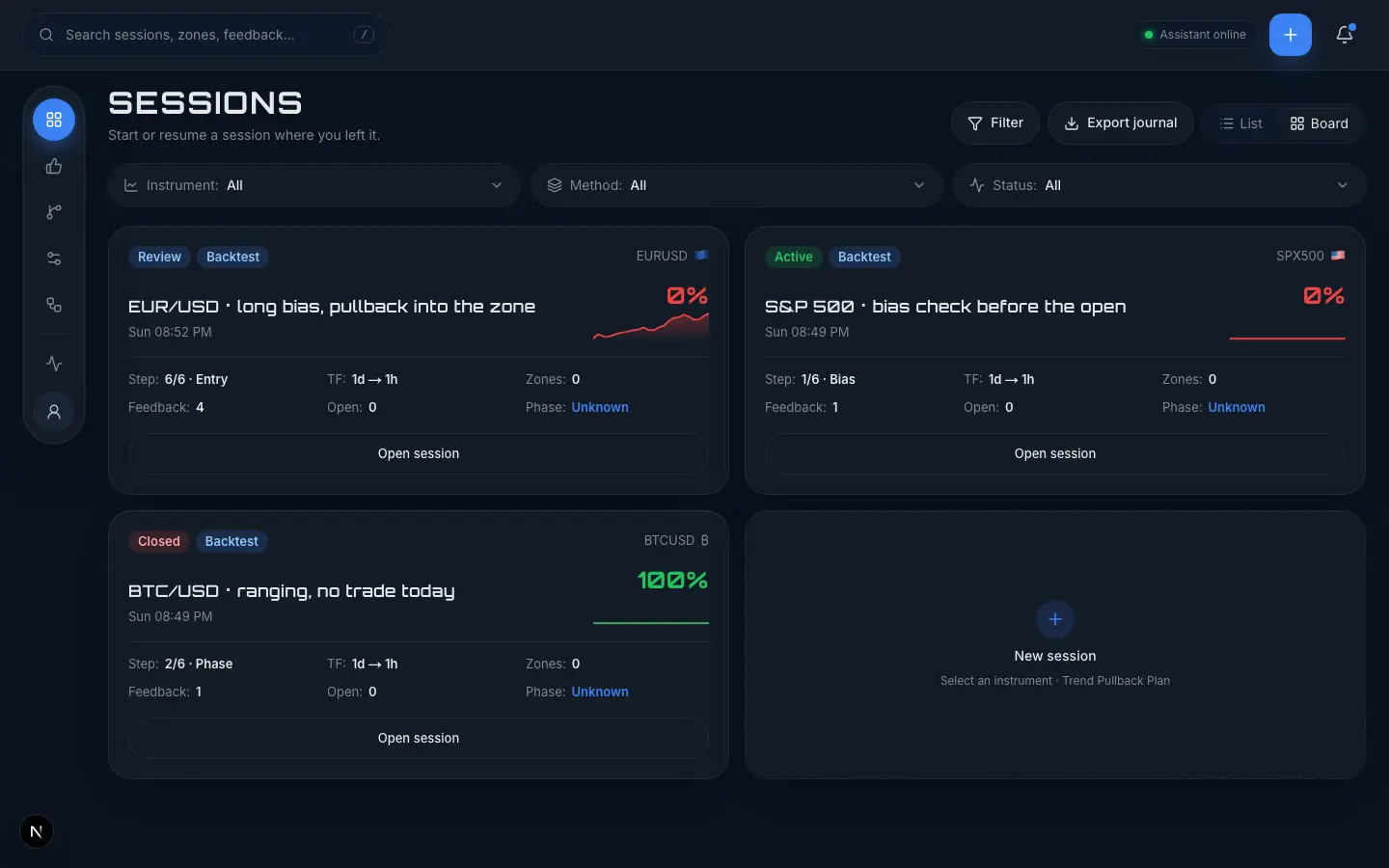
Five short, silent screen recordings of the product, made with the client's written approval. They run a placeholder strategy written for this demo, a textbook trend-pullback plan, in place of the client's method; none of his documents, rules, examples, evaluation data or sessions is loaded, and the session history shown was seeded for the demo.
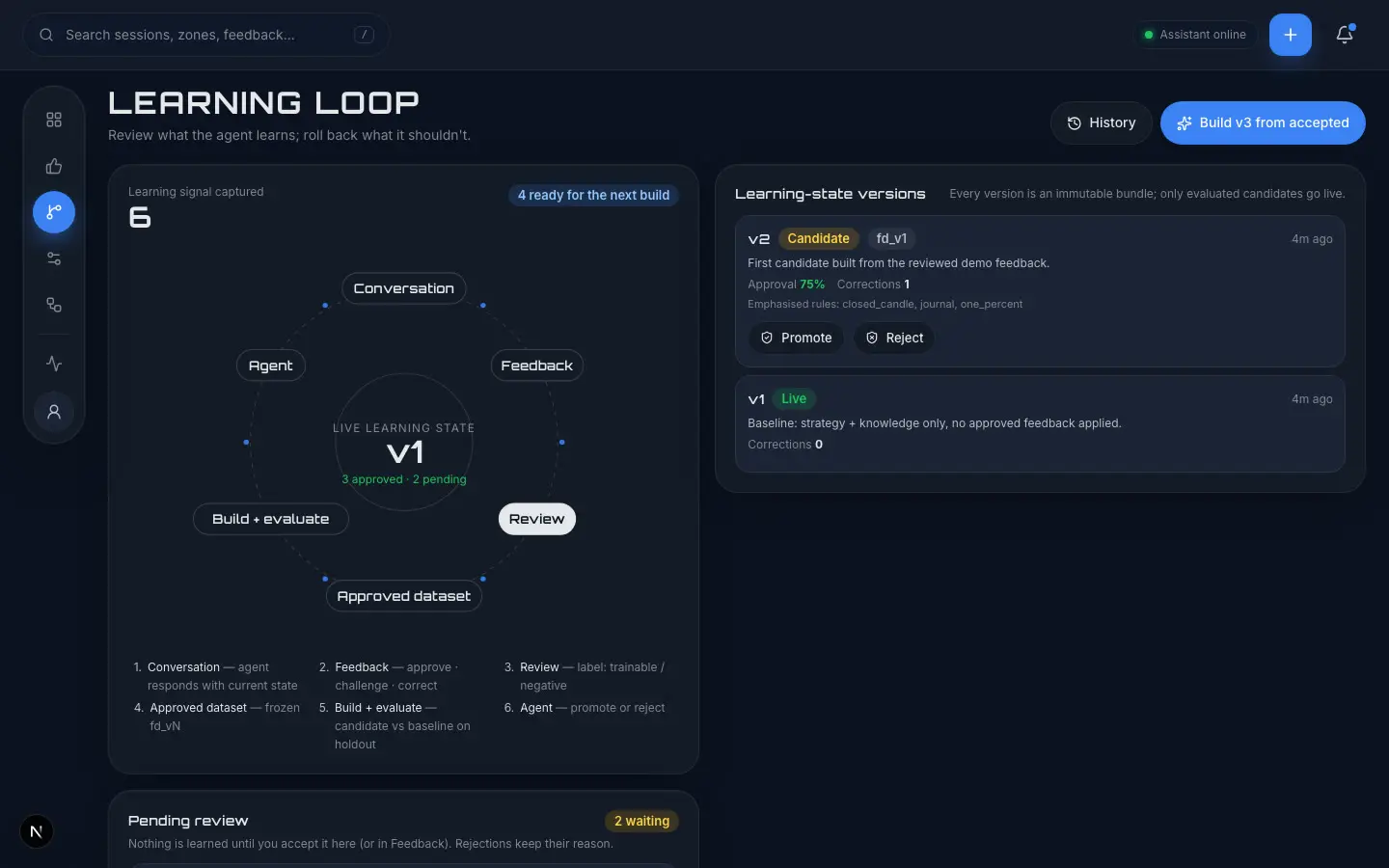
Working under NDA
The client's trading methodology, rules, documents, examples and evaluation cases are confidential, and so is anything derived from them. This page therefore shows the engineering, the client's own public review, and recordings that run a placeholder plan with his written approval; nothing from his method appears in them.
What the client said
Working with David on my AI Trading Assistant project has been an exceptional experience.
This was far from a conventional software development project. It involved building a sophisticated AI-powered trading copilot capable of understanding proprietary trading methodologies, interpreting complex market structures, integrating with external charting tools, maintaining contextual awareness across trading sessions, and supporting nuanced, discretionary decision-making.
What impressed me most about David was his ability to approach this level of complexity with technical competence, structured thinking, and genuine attention to the underlying vision. He understood that the objective wasn't simply to build another AI chatbot, but to create an intelligent, context-aware system capable of supporting a highly specialized trading workflow.
David demonstrated professionalism, thoughtful problem-solving, and a strong commitment to getting the details right. His ability to translate intricate requirements into practical technical solutions made collaborating with him particularly valuable.
Beyond his technical abilities, I genuinely appreciated his approach to collaboration, his receptiveness to feedback, and his dedication to the project.
It's rare to find someone who can bridge the gap between ambitious ideas and complex technical implementation so effectively.
I would wholeheartedly recommend David to anyone looking for a capable, reliable, and highly skilled developer, particularly for sophisticated AI applications and custom software projects. I would be delighted to work with him again.
Upwork review, 5.0 out of 5, 12 October 2026. Endorsed: Reliable, Committed to Quality, Solution Oriented, Clear Communicator, Accountable for Outcomes.
Outcome
Delivered in 25 hours between 21 September and 12 October 2026 at $80 per hour, $2,000 in total, and rated 5.0 on Upwork. The trader now has an assistant that is held to his own plan, answers with evidence, and improves only through feedback he has reviewed himself.
Client review on Upwork (5.0): “It's rare to find someone who can bridge the gap between ambitious ideas and complex technical implementation so effectively.”
Related projects
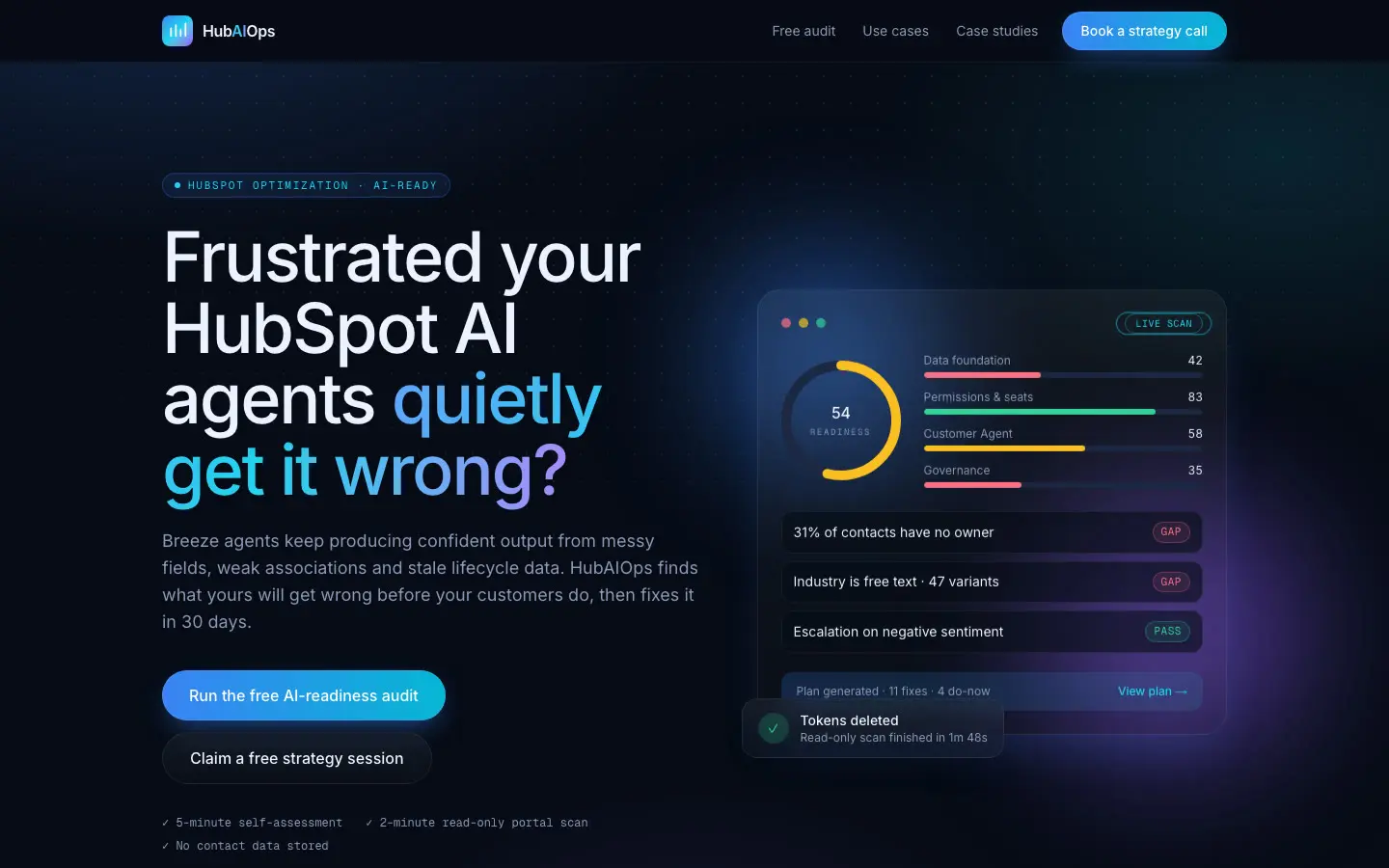
HubAIOps: HubSpot AI-Readiness Audit App with Claude-Written Plans
AI & Agents · AI ERP & SaaS · Full-Stack & UI/UX
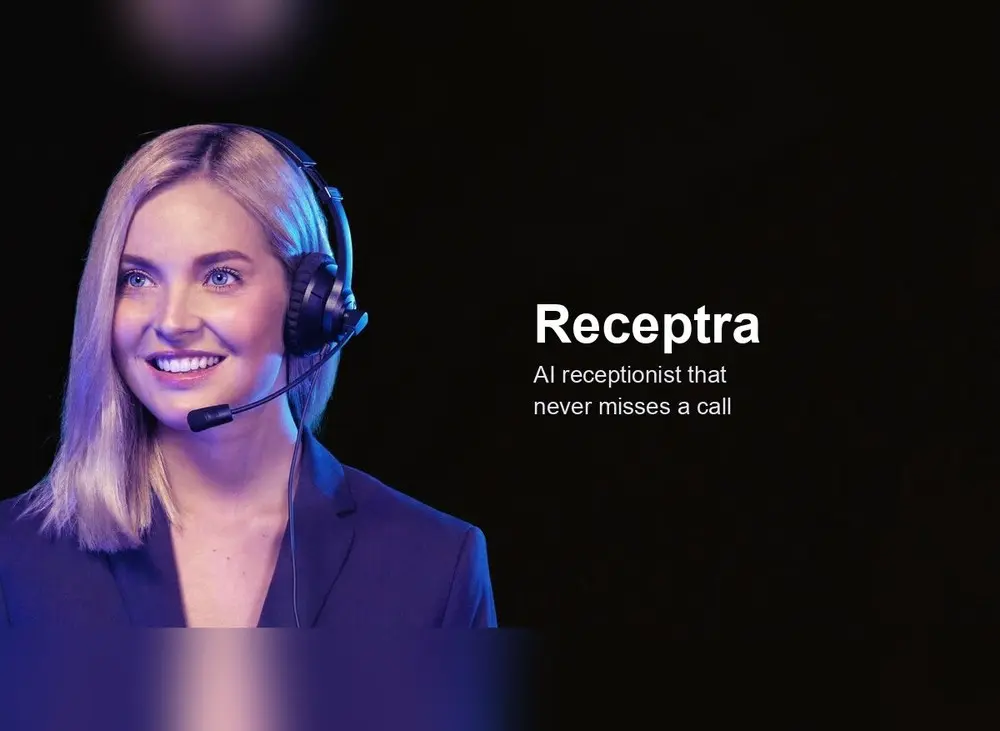
Receptra: AI Voice Receptionist SaaS for Small Businesses
AI & Agents · AI ERP & SaaS · Full-Stack & UI/UX
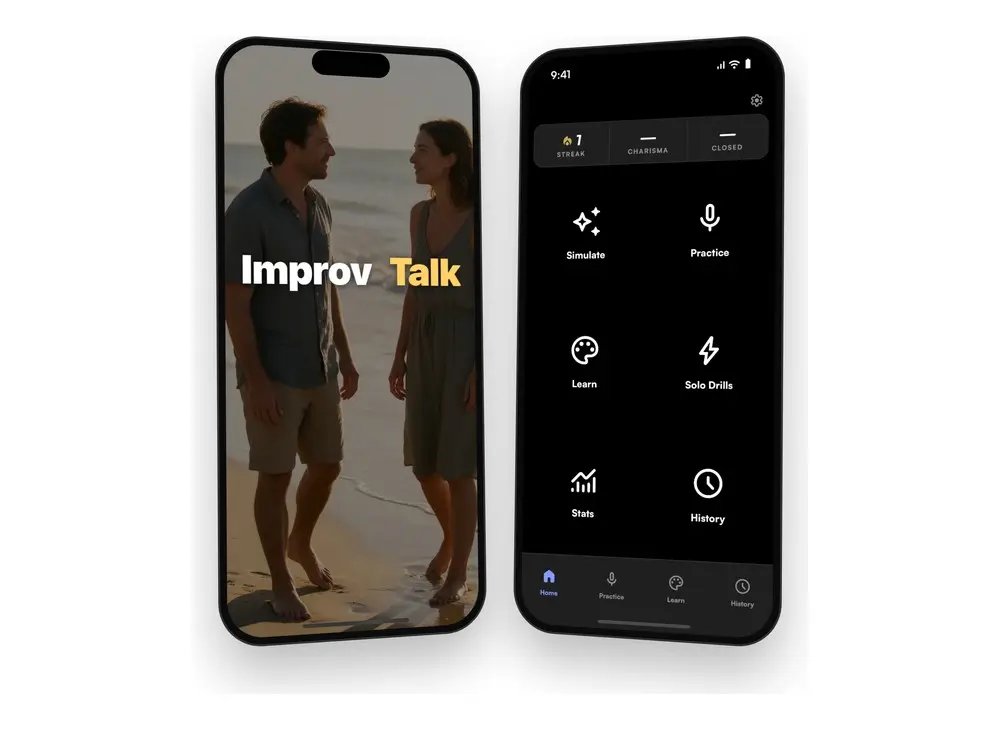
ImprovTalk: React Native AI Coach for Charisma and Rapport
Full-Stack & UI/UX · AI & Agents · AI Marketing & Analytics